AI applications are becoming increasingly expensive to operate.
Modern AI products often depend on large language models for:
- chatbots
- AI Agents
- workflow automation
- content generation
- customer support
- AI copilots
- enterprise automation
As usage scales, LLM API costs can grow rapidly.
Many AI SaaS companies struggle with:
- rising token costs
- infrastructure inefficiency
- expensive inference workloads
- provider dependency
- scaling challenges
At the same time, rebuilding AI systems every time a model changes is unrealistic.
This is why Unified AI Gateways and multi-model AI infrastructure are becoming critical for cost optimization.
Why LLM API Costs Increase So Quickly
Modern AI applications process massive amounts of requests daily.
Costs increase rapidly because of:
✔ high token consumption
✔ inefficient model selection
✔ expensive provider dependency
✔ poor routing systems
✔ duplicated infrastructure
✔ lack of orchestration
Many applications use expensive models for workloads that could run on cheaper alternatives.
This creates unnecessary operational costs.
Why Single-Provider AI Systems Create Problems
Many applications initially rely on one AI provider.
For example:
- OpenAI only
- Claude only
- Gemini only
But this creates several major limitations.
❌ No Cost Flexibility
Applications become dependent on one provider’s pricing structure.
This reduces optimization opportunities.
❌ Difficult Model Switching
Changing providers often requires:
- backend rewrites
- SDK updates
- infrastructure modifications
- workflow changes
This slows optimization.
❌ Inefficient Routing
Without orchestration systems, applications cannot dynamically select the most efficient model for specific workloads.
❌ Infrastructure Dependency Risk
Provider outages or pricing changes create operational instability.
The Solution: Unified AI Gateways
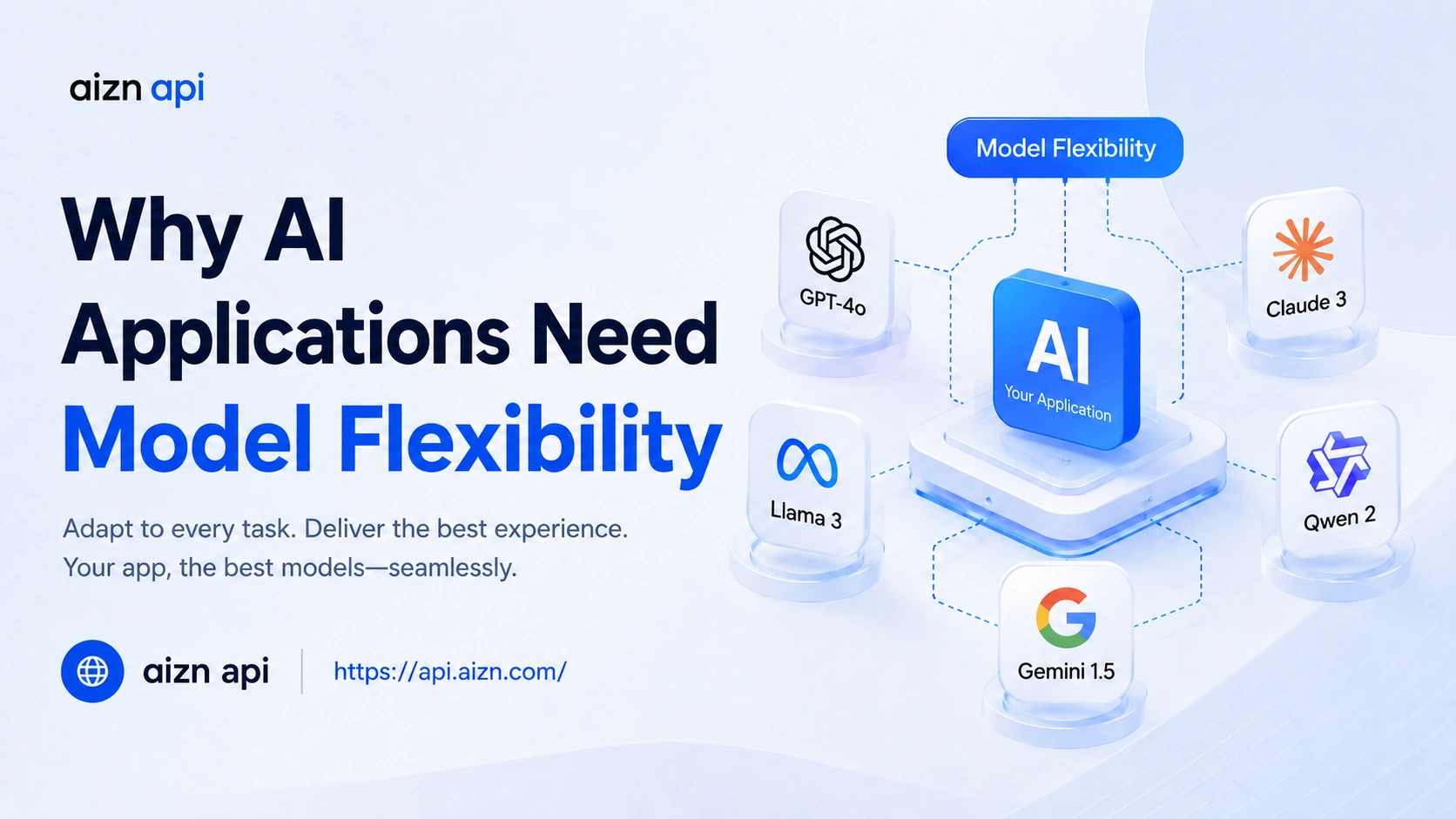
Unified AI Gateways allow developers to access multiple AI models through one centralized infrastructure layer.
Instead of integrating providers separately:
Applications connect once and dynamically route requests across multiple models.
This dramatically improves infrastructure flexibility and cost efficiency.
What Is a Unified LLM API?
A Unified LLM API allows applications to access multiple AI providers through one API integration.
Instead of separately managing:
- OpenAI API
- Claude API
- Gemini API
- DeepSeek API
developers use:
one unified AI infrastructure layer.
The platform handles:
- model routing
- provider abstraction
- API normalization
- orchestration workflows
- token management
- scalability optimization
This simplifies AI operations significantly.
How Multi-Model Routing Reduces Costs
Different AI models have different pricing structures.
For example:
| Workload | Best Model Strategy |
|---|---|
| Simple classification | Lower-cost model |
| Advanced reasoning | High-performance model |
| Long-context tasks | Context-optimized model |
| Bulk automation | Cost-efficient inference model |
Modern AI systems increasingly optimize requests dynamically.
This dramatically reduces operational expenses.
Why Dynamic Model Selection Matters
Not every task requires the most expensive AI model.
Unified AI Gateways allow applications to:
✔ route requests intelligently
✔ optimize token usage
✔ reduce inference costs
✔ improve scalability
✔ balance workloads efficiently
This creates much more sustainable AI infrastructure.
Why AI Infrastructure Flexibility Is Important
AI models evolve rapidly.
New models constantly improve:
- pricing
- inference speed
- reasoning quality
- multimodal capabilities
Applications that rely on rigid infrastructure struggle to adapt.
Unified AI systems provide:
infrastructure flexibility.
This is becoming critical for long-term scalability.
Unified AI Gateways vs Direct APIs
| Direct AI APIs | Unified AI Gateways |
|---|---|
| Single-provider dependency | Multi-provider flexibility |
| Manual orchestration | Centralized routing |
| Fragmented billing | Unified token management |
| Difficult scaling | Scalable orchestration |
| Expensive infrastructure | Optimized cost routing |
| Limited flexibility | Dynamic model switching |
The future increasingly belongs to unified orchestration systems.
Why AI Cost Optimization Matters for SaaS Products
AI inference costs directly affect:
- profit margins
- scalability
- pricing models
- infrastructure sustainability
As AI SaaS usage grows, infrastructure optimization becomes essential.
Businesses that optimize early gain major competitive advantages.
Common AI Workloads That Benefit From Routing
Unified AI infrastructure is especially valuable for:
AI chatbots
customer support AI
AI Agents
workflow automation
AI copilots
content generation systems
AI SaaS products
enterprise AI workflows
The larger the system becomes, the greater the cost optimization benefits.
How API AIZN Helps Reduce AI Infrastructure Costs
API AIZN Official Website provides a Unified AI Gateway designed for scalable multi-model AI infrastructure and cost-efficient AI operations.
API AIZN helps developers access:
- OpenAI
- Claude
- Gemini
- DeepSeek
- multiple AI providers
through one centralized API infrastructure.
API AIZN Capabilities
✔ Unified LLM API
✔ Multi-model AI access
✔ Dynamic model routing
✔ AI Gateway infrastructure
✔ Centralized token management
✔ Scalable orchestration systems
✔ Cost-efficient AI workflows
This helps developers optimize AI operations without rebuilding applications.
Why Early Infrastructure Optimization Matters
AI usage is growing rapidly.
Businesses that optimize infrastructure early can:
- reduce operational costs
- improve scalability
- increase flexibility
- reduce provider dependency
- accelerate AI growth
Over time, efficient orchestration systems will become standard infrastructure.
The Future of AI Infrastructure
AI infrastructure is evolving rapidly.
The industry is shifting from:
static single-model systems
to:
dynamic multi-model AI ecosystems.
Future AI applications increasingly depend on:
- Unified AI Gateways
- scalable orchestration
- dynamic routing
- multi-model infrastructure
- flexible inference systems
Businesses that adapt early will gain major long-term infrastructure advantages.
FAQ
Why are LLM API costs increasing?
Because modern AI applications process large amounts of inference requests and token usage at scale.
What is a Unified LLM API?
A Unified LLM API provides access to multiple AI models through one centralized API infrastructure.
How do AI Gateways reduce costs?
AI Gateways dynamically route workloads to the most cost-efficient models and simplify infrastructure management.
Why is multi-model AI important?
Different AI models offer different pricing, performance, and inference capabilities.
What is API AIZN?
API AIZN is a Unified AI Gateway platform that helps developers build scalable and cost-efficient AI infrastructure.
Conclusion
AI infrastructure costs are becoming one of the biggest challenges in modern AI development.
Applications that rely on rigid single-provider systems face:
- scalability limitations
- operational inefficiency
- rising infrastructure costs
- reduced flexibility
Unified AI Gateways solve these problems by enabling:
- dynamic routing
- multi-model orchestration
- scalable infrastructure
- cost-efficient AI operations
The future of AI infrastructure is unified, scalable, and dynamically optimized.