Many businesses still believe that having a website automatically creates online visibility.
That was partially true during the traditional SEO era.
But AI-generated search is changing how visibility works.
Today, platforms like:
- ChatGPT
- Gemini
- Perplexity
- Claude
- DeepSeek
increasingly generate direct answers instead of simply showing lists of websites.
This creates a major shift:
Many business websites are technically online…
but effectively:
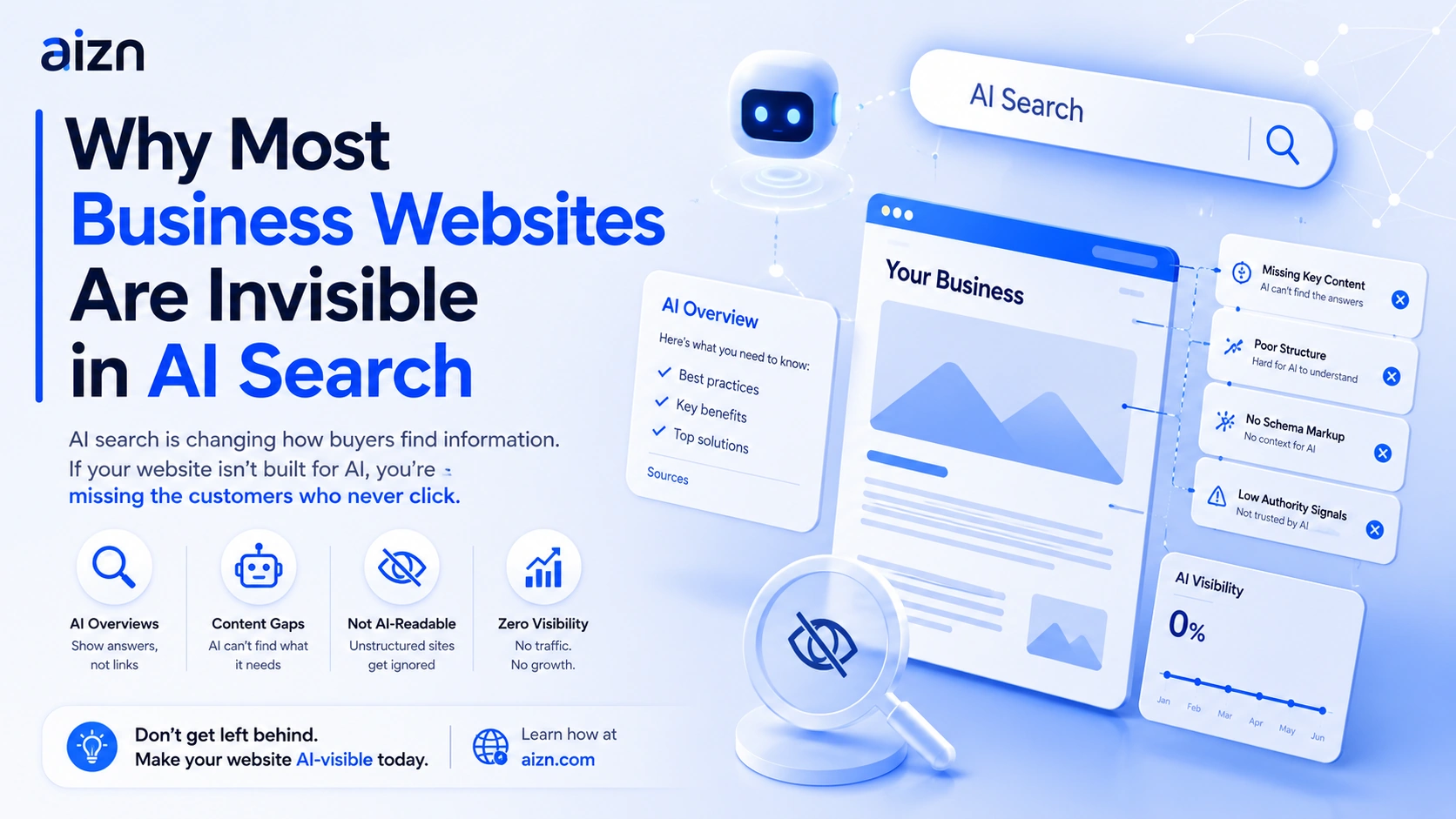
invisible inside AI-generated search.
The problem is not always poor design.
The problem is that most websites were never built for AI understanding.
The Real Problem Is Not Traffic
Most businesses still measure success using:
- keyword rankings
- impressions
- website traffic
- click-through rates
But AI-generated search changes the visibility model completely.
Users increasingly ask AI systems directly:
- “Best supplier?”
- “Recommended exporter?”
- “Top AI SEO platform?”
- “Best CNC manufacturer?”
If your website is not included in AI-generated answers, traditional rankings may matter less over time.
The real future question becomes:
Can AI systems understand and trust your business?
Why AI Systems Ignore Many Websites
Most websites fail AI visibility because they lack:
✔ semantic clarity
✔ structured information
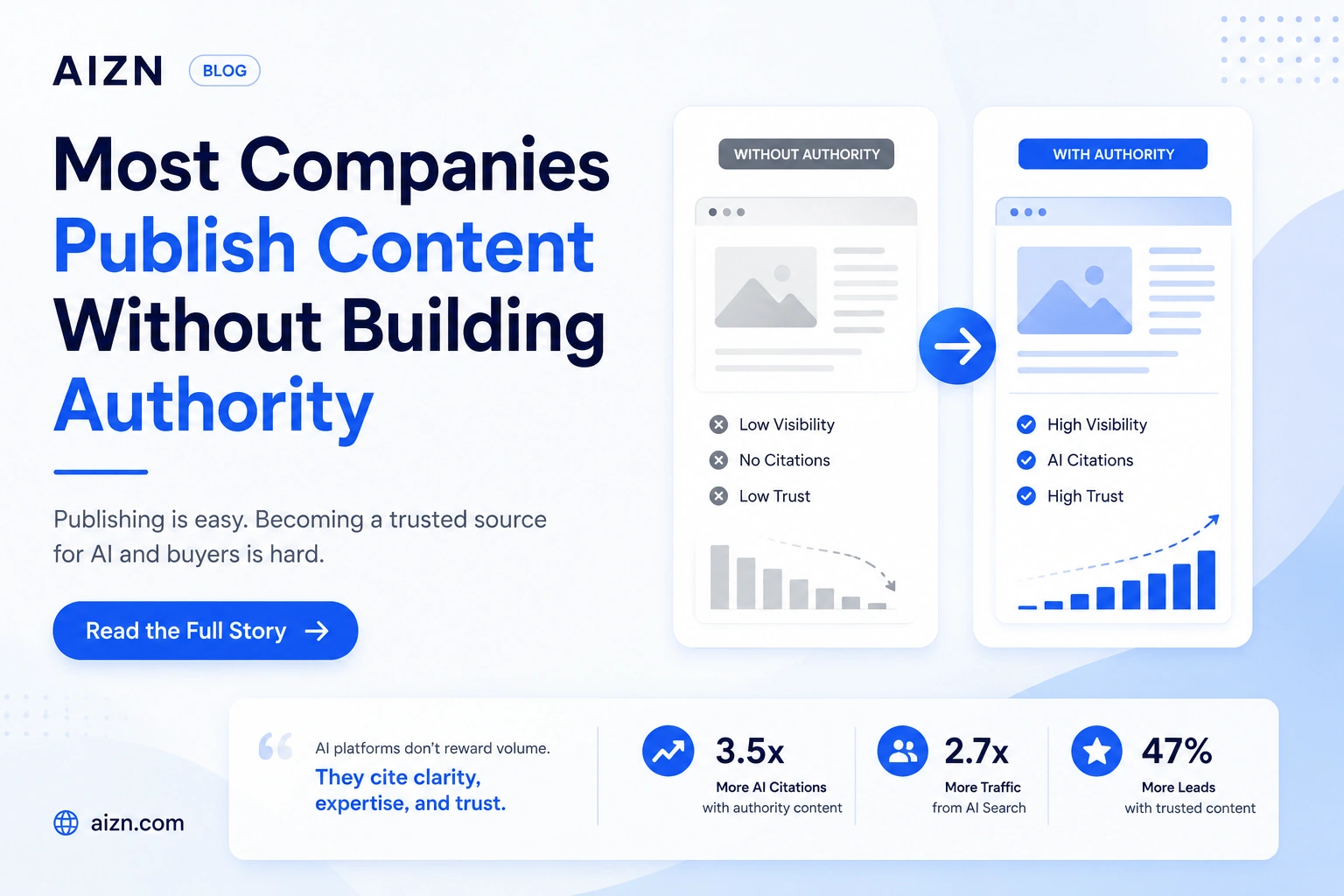
✔ topical authority
✔ AI-readable formatting
✔ contextual consistency
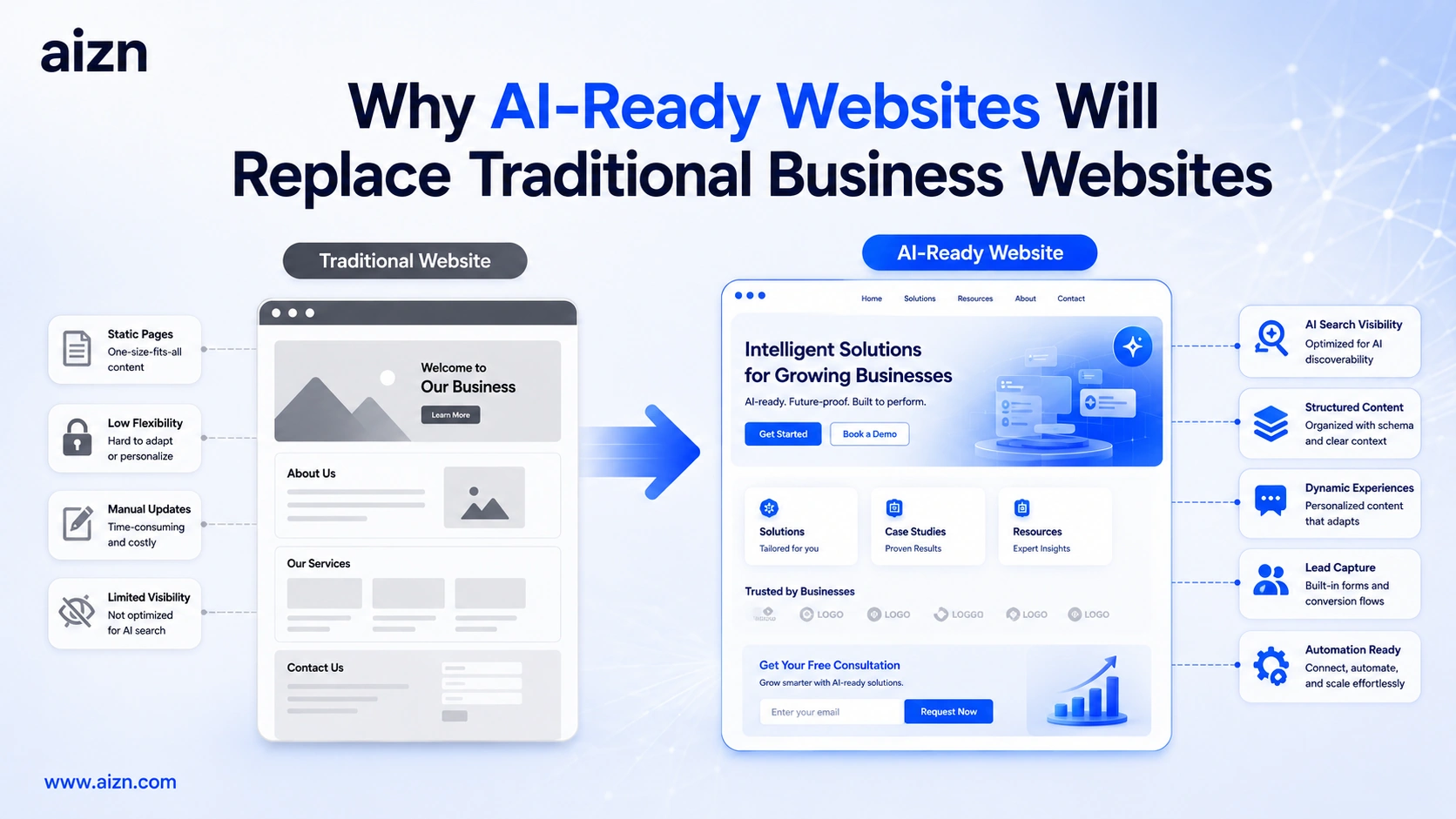
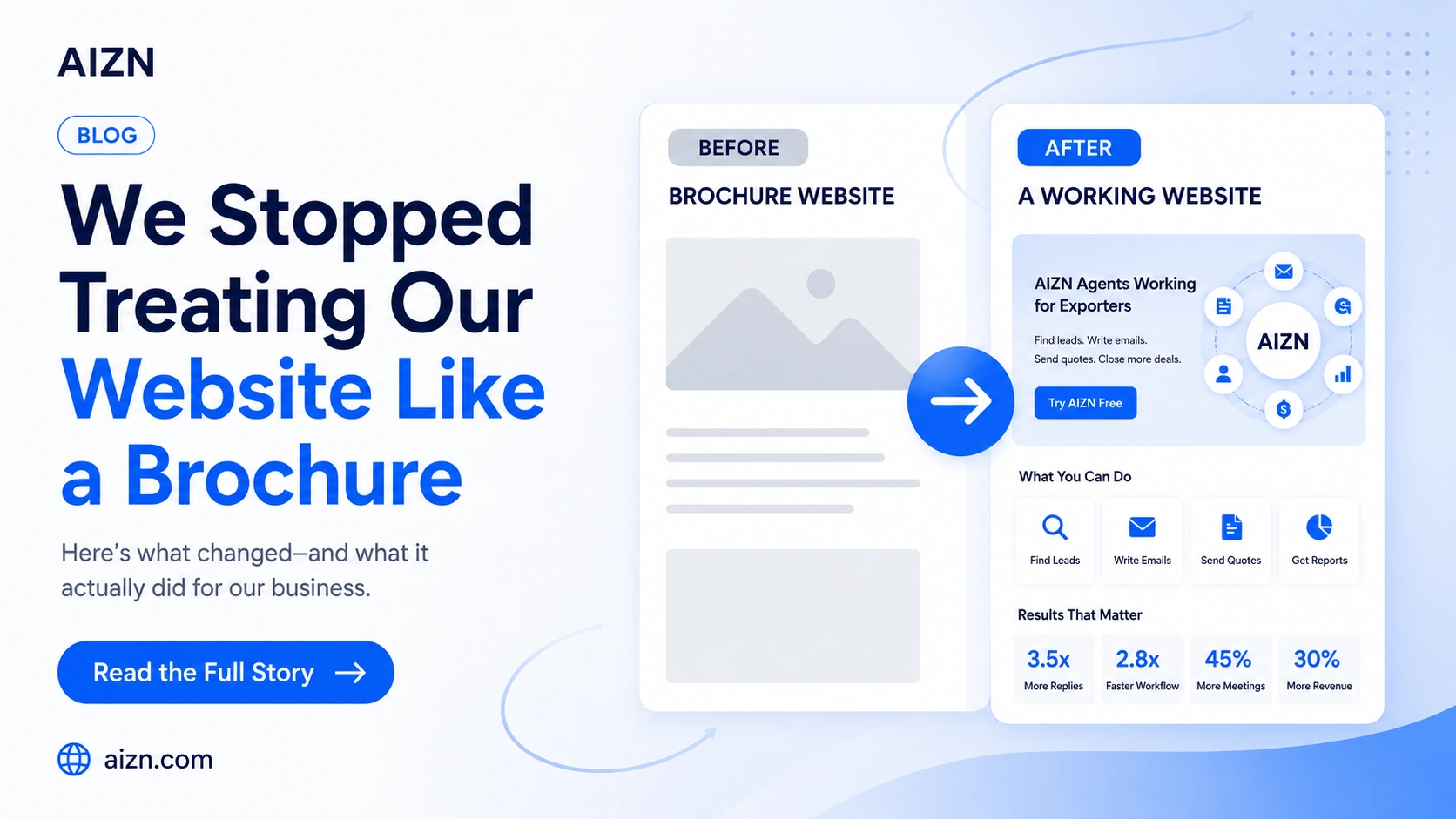
Many business websites still look like digital brochures instead of structured knowledge systems.
Example of Weak AI Visibility
A common manufacturing website may contain:
- vague slogans
- short product descriptions
- minimal educational content
- weak semantic structure
- no FAQ systems
From an AI system’s perspective, the website provides very little reusable knowledge.
As a result:
AI systems may avoid citing or recommending it.
AI Systems Prefer Structured Knowledge
Modern AI systems increasingly favor websites that explain:
- concepts
- workflows
- industry terminology
- operational problems
- comparison logic
- semantic relationships
This is why educational content performs much better in AI-generated search.
Traditional SEO vs AI Search Visibility
| Traditional SEO | AI Search Visibility |
|---|---|
| Ranking-focused | Recommendation-focused |
| Keyword-heavy | Semantic-heavy |
| Traffic-focused | AI visibility-focused |
| Search engine optimized | AI understanding optimized |
| Link-driven | Knowledge-driven |
The future increasingly belongs to semantic authority systems.
What Is GEO?
GEO stands for:
Generative Engine Optimization
GEO focuses on optimizing websites for AI-generated search systems.
The goal is to improve:
- AI understanding
- semantic authority
- recommendation probability
- AI citations
- answer-engine visibility
In simple terms:
SEO helps users find websites.
GEO helps AI systems recommend businesses.
Why Most Websites Lack Semantic Authority
Many websites publish only:
- homepage content
- product pages
- company introductions
But AI systems increasingly evaluate:
- contextual depth
- semantic ecosystems
- topical relationships
- structured knowledge
- educational relevance
This means businesses increasingly need:
topic ecosystems
instead of isolated pages.
Example of Strong Semantic Coverage
Instead of publishing only:
“We provide AI SEO solutions”
a stronger semantic ecosystem may include:
- What Is GEO?
- GEO vs SEO
- AI Search Optimization
- Semantic SEO Guide
- AI-ready Websites
- AI Content Operations
- AI SEO Automation
This dramatically improves semantic authority.
Why AI Systems Prefer FAQ Structures
FAQ systems are extremely important for GEO.
AI systems frequently reuse FAQ-style content because it is:
- structured
- concise
- easy to summarize
- easy to cite
Many websites still ignore FAQ structures completely.
This weakens AI readability significantly.
Why Continuous Content Matters
Static websites perform poorly in AI-generated search environments.
AI systems increasingly reward:
✔ active websites
✔ fresh semantic signals
✔ expanding topical ecosystems
✔ continuously updated information
Businesses that stop publishing gradually weaken their AI visibility.
Why AI Readability Matters
Many websites still use:
- vague marketing language
- oversized paragraphs
- poor semantic hierarchy
- weak formatting
- fragmented content structures
AI systems strongly prefer:
✔ concise explanations
✔ structured headings
✔ semantic formatting
✔ reusable information blocks
✔ contextual clarity
This improves AI understanding dramatically.
Why Multilingual Visibility Matters
AI-generated search is global.
Businesses increasingly need semantic visibility across:
- multiple countries
- multiple languages
- multiple AI systems
Modern GEO systems increasingly require:
- multilingual SEO
- semantic localization
- Hreflang structures
- multilingual content ecosystems
This becomes especially important for exporters and global businesses.
The Biggest Mistake Businesses Make
Many companies still think:
“Our website already exists, so we are visible.”
But visibility in AI-generated search requires much more than simply being online.
Future visibility increasingly depends on:
- semantic authority
- AI readability
- structured knowledge
- contextual trust
- GEO optimization
This is a completely different operating model.
What Type of Content Performs Best in AI Search?
AI systems strongly prefer:
- definitions
- FAQs
- tutorials
- semantic guides
- comparison pages
- workflow explanations
- structured informational content
Examples include:
- What Is GEO?
- AI SEO vs Traditional SEO
- Best AI Website Builder
- AI Search Optimization Guide
- Semantic SEO Strategies
These structures align naturally with AI-generated answers.
Why Early GEO Adoption Matters
AI-generated search is still evolving rapidly.
Businesses that build semantic authority early can:
- improve AI recommendation visibility
- increase AI citation frequency
- strengthen topical authority
- improve international visibility
- gain long-term competitive advantages
Over time, AI systems will increasingly favor trusted semantic ecosystems.
How AIZN Helps Businesses Improve AI Visibility
AIZN AI Official Website helps businesses improve AI-generated visibility through GEO, semantic SEO, and AI-ready website systems.
AIZN combines:
GEO + SEO + Data + AI Agents
to help businesses build:
- semantic topic ecosystems
- AI-ready websites
- multilingual visibility systems
- scalable content operations
- structured GEO frameworks
AIZN GEO Capabilities
✔ GEO optimization systems
✔ AI-generated SEO content
✔ semantic topic ecosystems
✔ multilingual publishing
✔ AI citation optimization
✔ AI-friendly website structures
✔ scalable content automation
This helps businesses prepare for the future of AI-generated discovery systems.
FAQ
Why are many websites invisible in AI search?
Because they lack semantic structures, contextual authority, and AI-readable content systems.
What is GEO?
GEO stands for Generative Engine Optimization, which focuses on AI-generated search visibility.
Why is semantic authority important?
Because AI systems evaluate contextual expertise and topical consistency instead of only keywords.
What type of content performs best for AI search?
Definitions, FAQs, tutorials, comparison pages, and structured semantic content.
What is AIZN?
AIZN is an AI platform that helps businesses improve GEO, semantic SEO, and AI-ready visibility systems.
Conclusion
The AI search era is changing how businesses gain visibility online.
Many websites still operate like static digital brochures.
But future visibility increasingly belongs to businesses that build:
- semantic authority
- GEO systems
- structured knowledge ecosystems
- AI-ready websites
- continuous content operations
instead of relying only on traditional SEO.
In the AI era, visibility depends on whether AI systems understand and trust your business.