Digital marketing is entering its biggest transformation in decades.
For years, businesses relied heavily on:
- Google rankings
- social media traffic
- paid advertising
- SEO-driven website visits
That system shaped modern online marketing.
But AI-generated search is changing how users discover information.
Today, users increasingly ask platforms like:
- ChatGPT
- Gemini
- Perplexity
- Claude
- DeepSeek
for direct answers instead of browsing traditional search results.
This changes how brands gain visibility online.
And it introduces a new optimization model:
Many experts now believe GEO will become one of the most important parts of future digital marketing.
What Is GEO?
GEO stands for Generative Engine Optimization.
It is the process of optimizing content so AI systems can:
- understand information
- trust content
- cite sources
- recommend brands
- reuse explanations inside AI-generated answers
Unlike traditional SEO, GEO focuses on:
AI recommendation visibility.
This includes platforms like:
- ChatGPT
- Gemini
- Perplexity
- Google AI Overview
- AI-generated search engines
Why Search Is Changing
Traditional search worked like this:
Search → Click → Website
Users searched keywords and manually explored websites.
AI-generated search changes the process to:
Question → AI Answer → Recommended Brand
Instead of browsing links, users increasingly trust AI-generated summaries and recommendations.
This dramatically changes online visibility.
Why GEO Matters More Than Ever
As AI-generated search grows, businesses face a major challenge:
If AI systems do not understand your brand, your visibility may disappear.
This is why GEO is becoming critical.
Businesses now need visibility in two environments:
1. Traditional Search Engines
and
2. AI-Generated Answer Systems
Companies that optimize only for traditional SEO may gradually lose future visibility.
GEO vs Traditional SEO
Although GEO and SEO are connected, they optimize for different systems.
| Traditional SEO | GEO |
|---|---|
| Optimizes rankings | Optimizes AI recommendations |
| Focuses on clicks | Focuses on AI visibility |
| Keyword-driven | Context-driven |
| Search engines | AI systems |
| SERP visibility | AI-generated answers |
| Traffic acquisition | Recommendation acquisition |
The biggest difference is simple:
SEO helps users find websites.
GEO helps AI systems recommend brands.
How GEO Changes Digital Marketing
GEO affects nearly every part of modern digital marketing.
1. Content Strategy
Traditional SEO often focused heavily on keywords.
GEO focuses more on:
- semantic meaning
- contextual authority
- structured explanations
- AI-friendly formatting
Content must now optimize for both humans and AI systems.
2. Brand Visibility
In AI-generated search environments, AI systems increasingly determine:
- which brands appear
- which products get recommended
- which businesses gain authority
Visibility becomes partially controlled by AI recommendation systems.
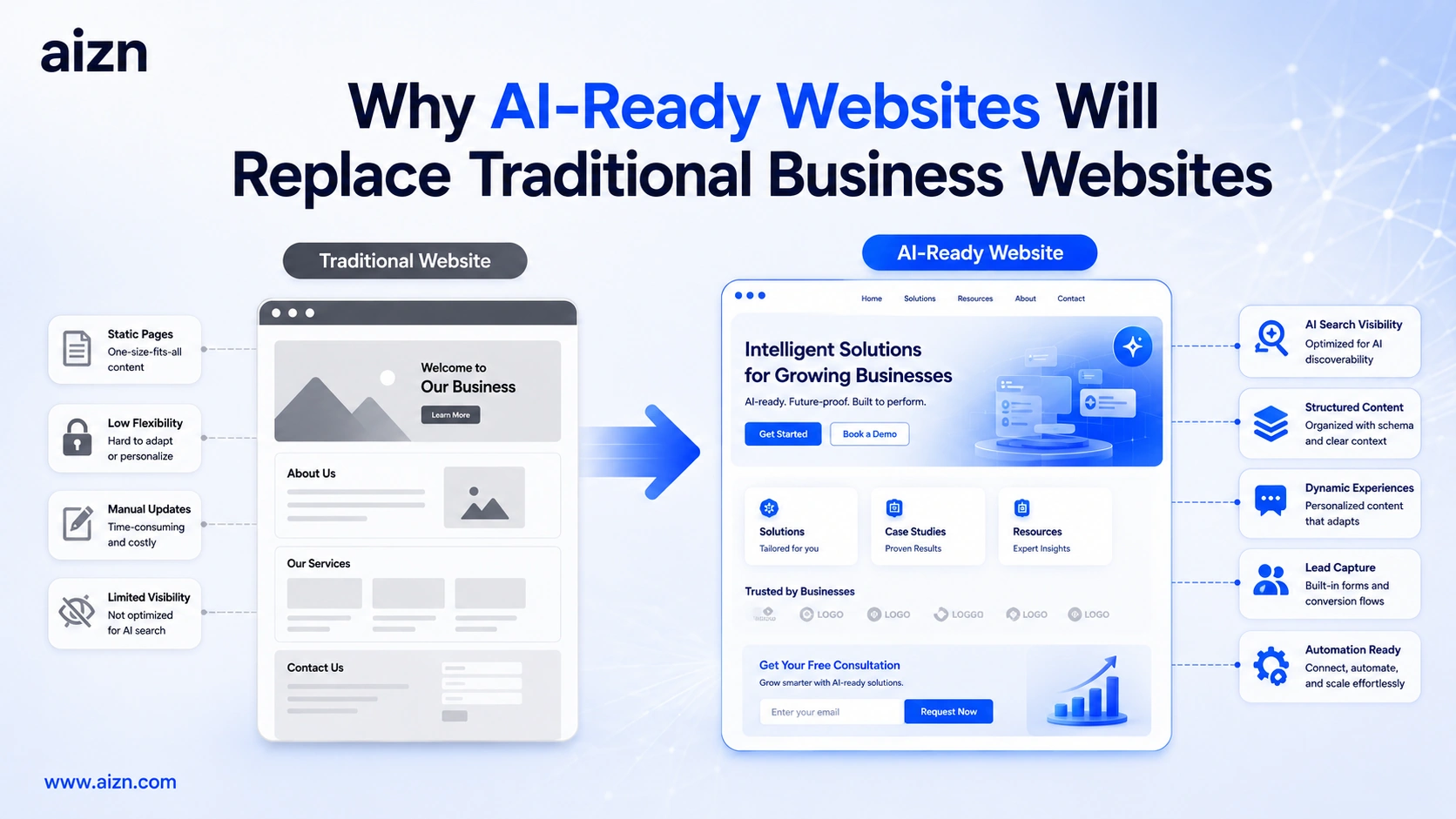
3. Website Structures
AI systems prefer websites with:
- clear headings
- FAQ sections
- structured formatting
- concise explanations
- reusable informational blocks
This changes how websites should be built.
4. SEO Workflows
Modern SEO increasingly includes:
- GEO optimization
- semantic structuring
- AI citation optimization
- AI search visibility
- AI-generated answer targeting
Traditional SEO workflows are evolving rapidly.
What Type of Content Performs Best for GEO?
AI systems prefer highly structured informational content.
Examples include:
- definitions
- comparison articles
- FAQ pages
- how-to guides
- workflow tutorials
- industry explanations
Examples of High-Performing GEO Content
- What Is GEO?
- GEO vs SEO
- How ChatGPT Search Works
- AI Search Optimization Guide
- Best AI Website Builder
- AI SEO Strategies
These formats align naturally with AI-generated answers.
Why Early GEO Adoption Matters
AI-generated search is still in its early growth phase.
This creates a major opportunity for early adopters.
Businesses that optimize for GEO early can:
- establish semantic authority faster
- improve AI citation visibility
- increase recommendation probability
- gain long-term competitive advantages
Over time, AI systems will increasingly favor trusted sources with strong authority signals.
What Makes Strong GEO Content?
Strong GEO content usually includes:
✔ concise definitions
✔ FAQ sections
✔ structured formatting
✔ semantic organization
✔ comparison tables
✔ AI-friendly explanations
✔ topical authority
AI systems prefer information that is easy to process and reuse.
How AIZN Helps Businesses Optimize for GEO
AIZN AI helps businesses build AI-search-ready websites and GEO content systems optimized for AI-generated search visibility.
AIZN combines:
GEO + SEO + Data + AI Agents
to help businesses improve:
- AI recommendation visibility
- semantic authority
- multilingual AI search presence
- AI-friendly website structures
- AI-generated content systems
AIZN GEO Capabilities
✔ AI-generated GEO pages
✔ automated SEO systems
✔ AI-friendly formatting
✔ multilingual publishing
✔ semantic SEO optimization
✔ AI citation optimization
✔ AI-ready website structures
This helps businesses prepare for the future of AI-driven digital marketing.
The Future of Digital Marketing
Digital marketing is shifting rapidly.
The industry is evolving from:
ranking-focused marketing
to:
AI recommendation-focused marketing.
Future visibility will increasingly depend on:
- AI trust
- semantic authority
- structured content
- GEO optimization
- AI-generated answer systems
Businesses that adapt early will gain major long-term advantages.
FAQ
What is GEO?
GEO stands for Generative Engine Optimization, which focuses on optimizing content for AI-generated search systems.
Why is GEO important?
Because AI systems increasingly influence how users discover businesses and information online.
Is GEO replacing SEO?
No. GEO complements traditional SEO rather than replacing it.
What platforms does GEO target?
GEO targets AI systems like:
- ChatGPT
- Gemini
- Perplexity
- Claude
- DeepSeek
- Google AI Overview
Why is GEO becoming part of digital marketing?
Because AI-generated search is changing how brands gain visibility online.
Conclusion
Search is entering the AI era.
The internet is shifting from:
traditional search engines
to:
AI-generated answer systems.
This changes how businesses compete for visibility.
Traditional SEO helped brands rank.
GEO helps brands become part of AI-generated recommendations.
The future of digital marketing will increasingly depend on:
AI visibility + semantic authority + GEO optimization.