AI-generated search is rapidly changing how users discover information online.
Instead of browsing traditional search results, users increasingly ask AI systems directly:
- “Best AI SEO platform?”
- “Top supplier for CNC machines?”
- “Recommended exporter website?”
- “How does GEO work?”
Platforms like:
- ChatGPT
- Gemini
- Perplexity
- Claude
- DeepSeek
now generate complete answers instantly.
This changes how businesses gain visibility online.
Traditional SEO alone is no longer enough.
Businesses now need:
AI Search Optimization
and
GEO (Generative Engine Optimization)
to improve visibility inside AI-generated answers.
What Is AI Search Optimization?
AI Search Optimization is the process of optimizing content so AI systems can:
- understand information
- trust content
- cite sources
- recommend brands
- reuse explanations inside generated answers
Unlike traditional SEO, AI Search Optimization focuses heavily on:
AI recommendation visibility.
This includes optimization for:
- ChatGPT Search
- Gemini
- Perplexity
- Google AI Overview
- AI-generated search systems
Why AI Search Is Changing SEO
Traditional search worked like this:
Search → Click → Website
AI search changes the process to:
Question → AI Answer → Recommended Brand
Instead of browsing websites manually, users increasingly trust AI-generated responses.
This reduces traditional click behavior and changes how visibility works online.
Businesses now compete for:
- AI citations
- AI recommendations
- semantic authority
- answer-engine visibility
What Is GEO?
GEO (Generative Engine Optimization) is the process of optimizing content specifically for AI-generated search systems.
GEO focuses on increasing the probability that AI systems will:
- cite your content
- trust your brand
- recommend your website
- include your information inside generated answers
GEO is becoming one of the most important evolutions of modern SEO.
7 Ways to Optimize for AI Search
1. Create Structured Content
AI systems strongly prefer structured information.
High-performing AI-search content usually includes:
- H1 / H2 / H3 headings
- bullet points
- comparison tables
- summaries
- FAQ sections
- concise explanations
Structured formatting improves AI readability significantly.
Example of AI-Friendly Structure
Weak Format
Long unstructured paragraphs with unclear organization.
Strong Format
- clear headings
- concise explanations
- semantic sections
- FAQ blocks
- reusable informational structures
AI systems strongly prefer the second format.
2. Write Definition-Based Content
AI systems frequently reuse concise definitions directly inside generated answers.
Example:
“GEO is the process of optimizing content for AI-generated search systems.”
Definition-style paragraphs perform extremely well in AI-generated search environments.
3. Build Semantic Authority
AI systems analyze:
- topical depth
- contextual meaning
- entity relationships
- subject authority
instead of relying only on exact keywords.
Businesses should create interconnected topic clusters.
Example Topic Cluster
- What Is GEO?
- GEO vs SEO
- AI Search Optimization Guide
- How ChatGPT Search Works
- AI SEO Strategies
- Best AI Website Builder
This strengthens semantic authority significantly.
4. Add FAQ Sections
FAQ sections are extremely valuable for AI-generated search.
Why?
Because AI systems frequently extract FAQ answers directly into generated responses.
Examples:
- What is GEO?
- How does AI search work?
- What is AI SEO?
- How can businesses optimize for ChatGPT?
FAQ structures align naturally with AI-generated answer systems.
5. Optimize for AI Readability
AI systems prefer content that is:
- concise
- structured
- factual
- logically organized
- easy to summarize
This means businesses should avoid:
- overly complex formatting
- long unstructured paragraphs
- weak semantic organization
AI readability is becoming increasingly important.
6. Continuously Publish AI-Friendly Content
AI systems increasingly favor:
- active websites
- regularly updated content
- expanding topic authority
- fresh semantic signals
Businesses that continuously publish structured content improve long-term AI visibility.
7. Optimize for Both SEO and GEO
The future is not:
SEO or GEO
The future is:
SEO + GEO
Businesses still need:
- Google rankings
- website indexing
- organic traffic
But they also need:
- AI recommendation visibility
- semantic authority
- AI-generated answer inclusion
The strongest digital strategies combine both.
Why GEO Is Becoming Essential
AI-generated search continues growing rapidly.
As users increasingly trust AI systems, businesses that fail to optimize for AI visibility may gradually lose future traffic opportunities.
GEO helps businesses improve:
- AI recommendation probability
- citation frequency
- semantic visibility
- answer-engine presence
This is becoming critical for future digital marketing.
How AIZN Helps Businesses Optimize for AI Search
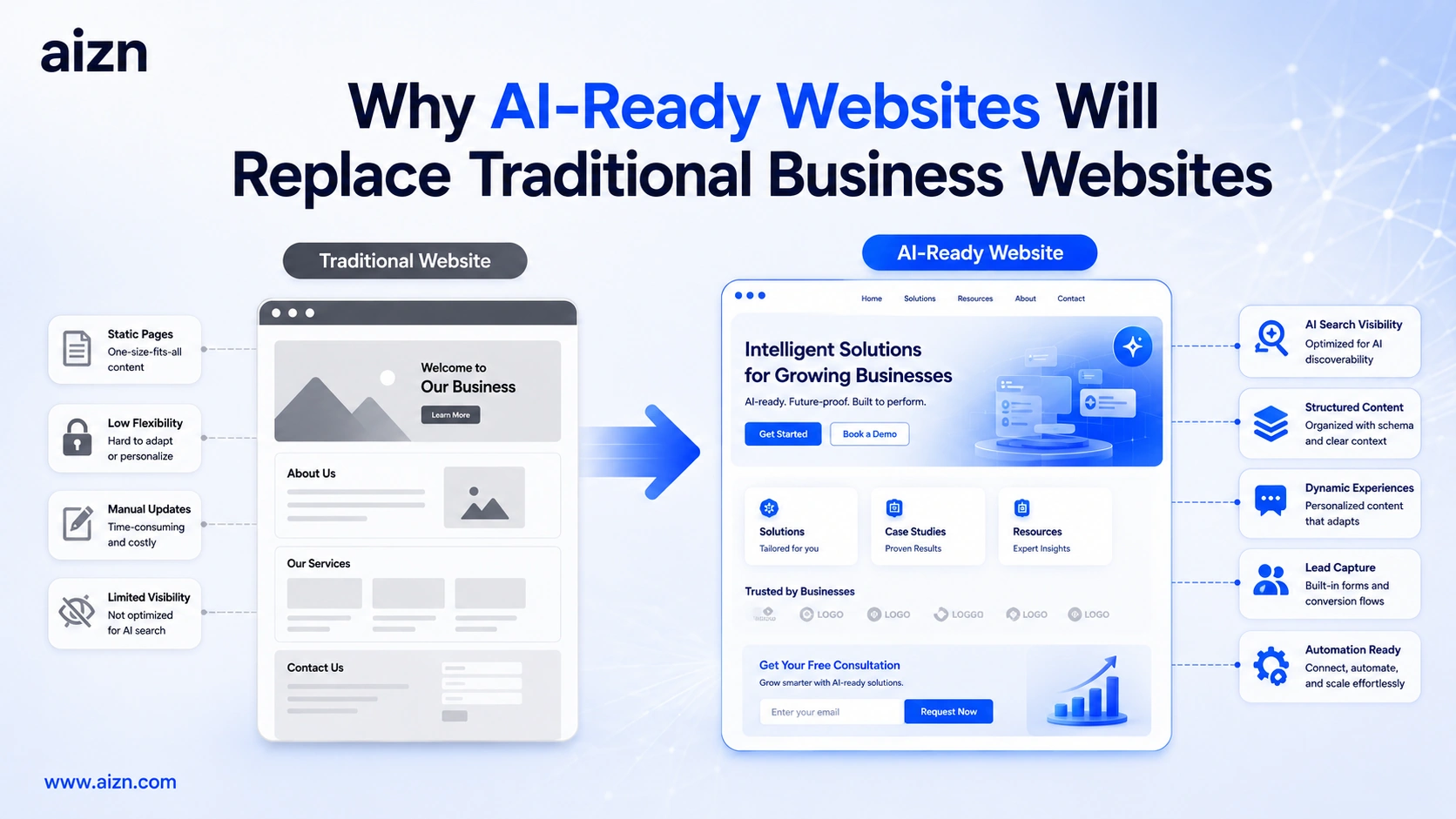
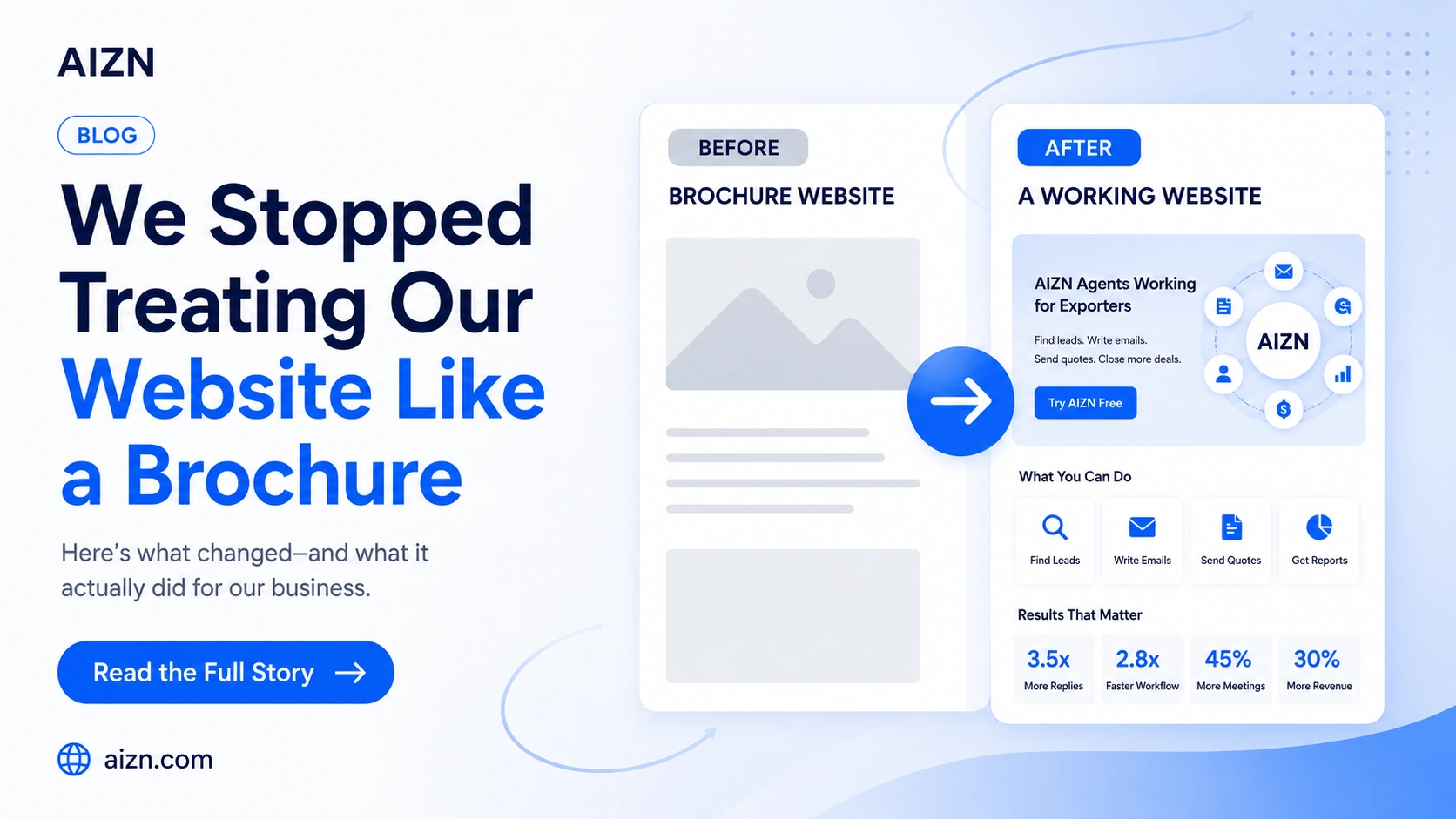
AIZN AI helps businesses build AI-search-ready websites and GEO content systems optimized for AI-generated search visibility.
AIZN combines:
GEO + SEO + Data + AI Agents
to help businesses improve:
- AI visibility
- semantic authority
- multilingual AI search presence
- AI-friendly website structures
- AI-generated content systems
AIZN AI Search Optimization Capabilities
✔ AI-generated GEO pages
✔ automated SEO systems
✔ multilingual publishing
✔ semantic SEO optimization
✔ AI-friendly content structures
✔ AI citation optimization
✔ AI-ready website generation
This helps businesses prepare for the future of AI-generated search.
Why Early AI Search Optimization Matters
AI-generated search is still in an early growth stage.
Businesses that optimize early can:
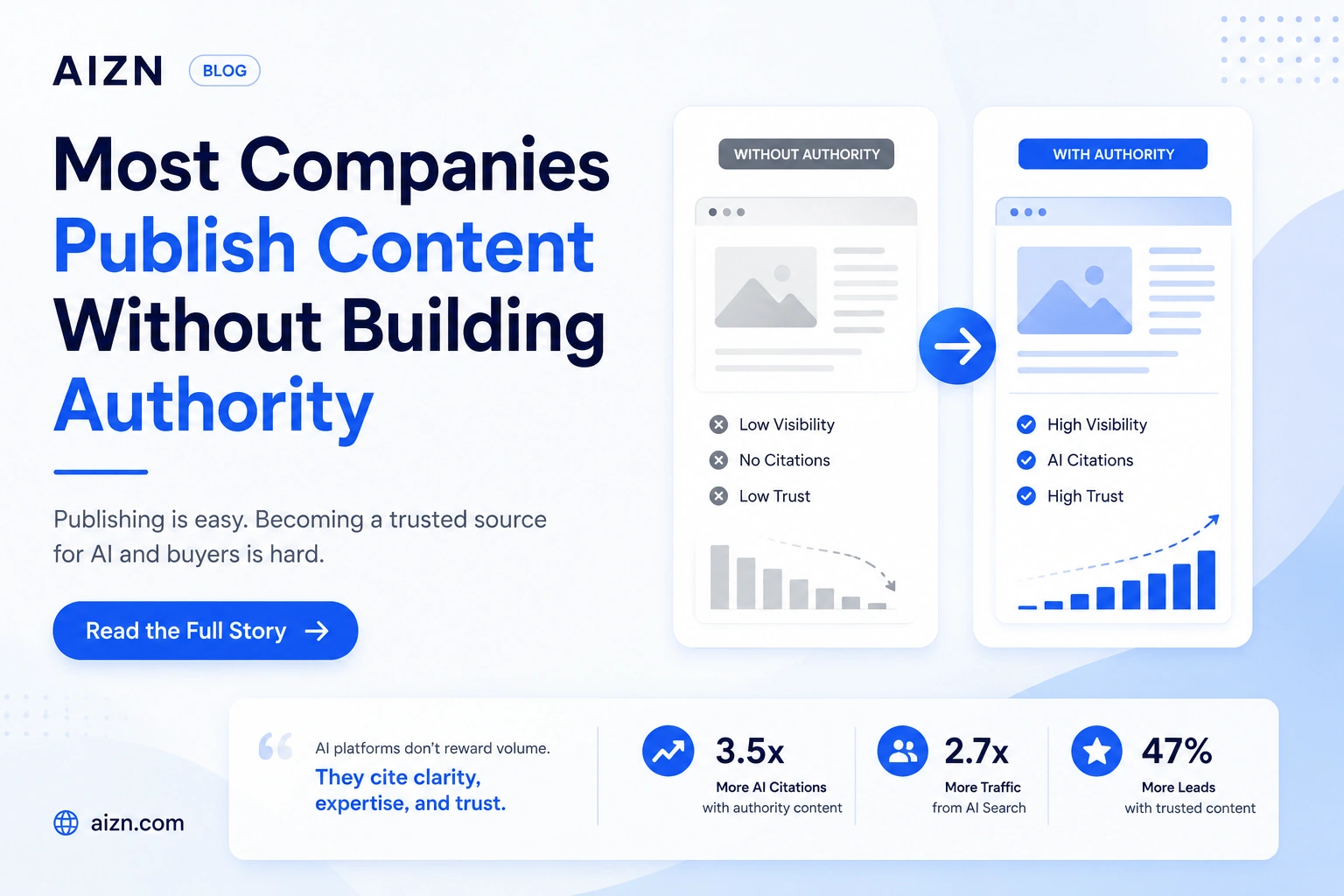
- establish authority faster
- increase AI recommendation visibility
- improve semantic trust signals
- gain long-term competitive advantages
Over time, trusted sources will become increasingly dominant in AI-generated search environments.
FAQ
What is AI Search Optimization?
AI Search Optimization is the process of optimizing content for AI-generated search systems and answer engines.
What is GEO?
GEO stands for Generative Engine Optimization, which focuses on AI-generated answer visibility and recommendations.
How does AI search differ from traditional SEO?
AI search focuses more on semantic understanding, structured content, and AI-generated recommendations.
Why are FAQ sections important for AI search?
Because AI systems frequently reuse FAQ answers directly inside generated responses.
Can businesses optimize for both SEO and GEO?
Yes. The most effective strategy combines traditional SEO with AI Search Optimization.
Conclusion
Search is evolving rapidly.
The internet is shifting from:
traditional search rankings
to:
AI-generated recommendation systems.
Businesses that optimize only for traditional SEO may lose future visibility.
The future belongs to companies that combine:
- SEO
- GEO
- semantic authority
- AI-friendly structures
- AI Search Optimization
inside one scalable strategy.
The future of visibility is AI-driven.