Search engines are no longer the only way users discover information online.
Today, millions of users ask AI systems directly:
- “What is the best AI SEO platform?”
- “Which supplier should I choose?”
- “What’s the best AI website builder?”
- “How does GEO work?”
Instead of displaying a list of websites, AI systems like ChatGPT, Gemini, and Perplexity generate complete answers instantly.
This changes how businesses gain visibility online.
And it introduces a new concept:
AI Search Optimization
What Is AI Search Optimization?
AI Search Optimization is the process of optimizing content so AI systems can:
- understand your information
- trust your content
- reference your brand
- cite your website
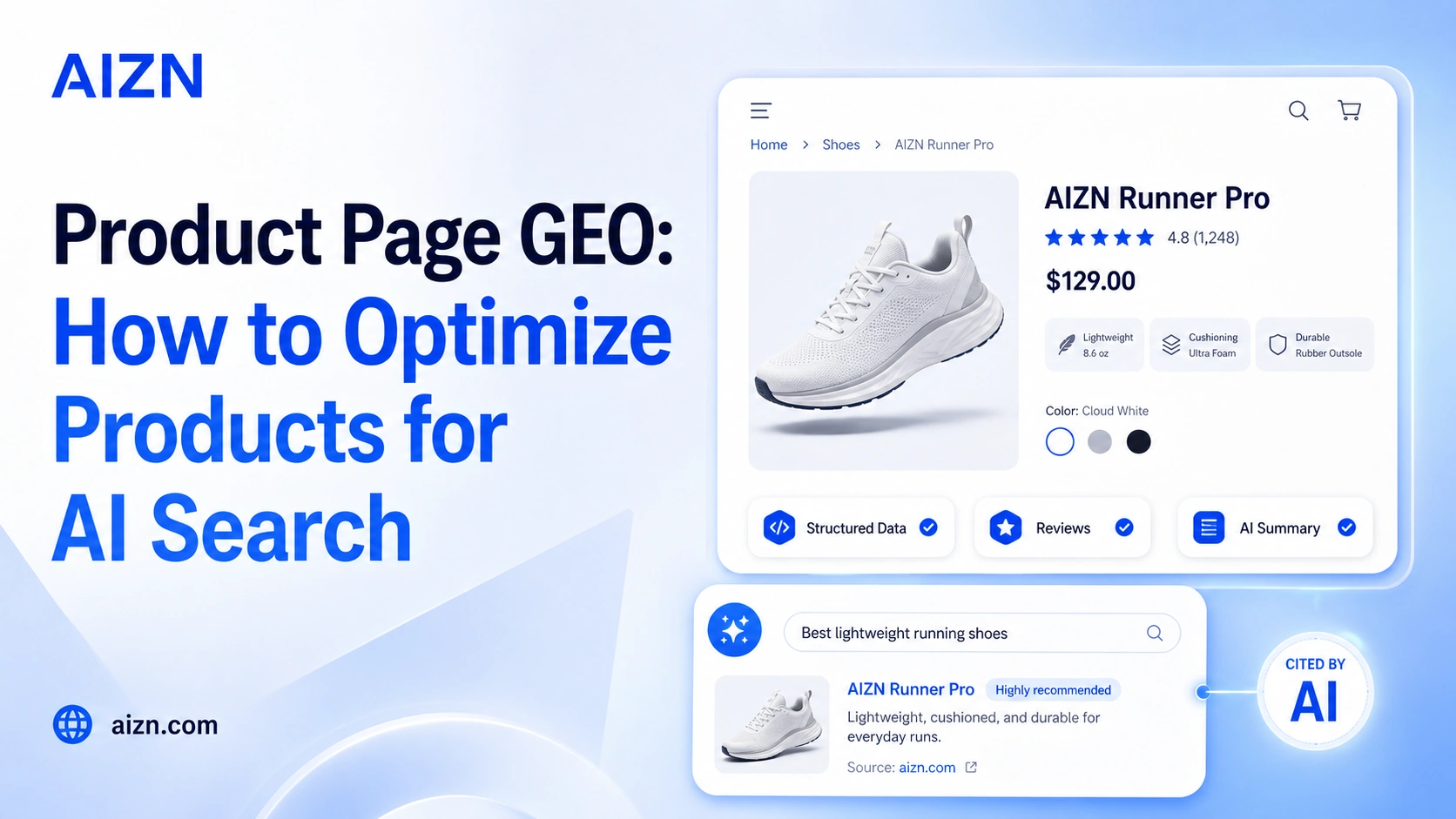
- recommend your products inside generated answers
Unlike traditional SEO, AI Search Optimization focuses on:
visibility inside AI-generated responses.
This includes platforms like:
- ChatGPT
- Gemini
- Perplexity
- Claude
- DeepSeek
- Google AI Overview
Why AI Search Is Changing Digital Marketing
Traditional search worked like this:
Search → Click → Website
AI search changes the process to:
Question → AI Answer → Recommended Brand
This means users increasingly receive answers without visiting search results pages.
AI systems now influence:
- product discovery
- supplier selection
- software recommendations
- purchasing decisions
- brand visibility
Businesses that fail to optimize for AI search may gradually lose visibility online.
AI Search Optimization vs Traditional SEO
Although related, AI Search Optimization and SEO are not the same.
| Traditional SEO | AI Search Optimization |
|---|---|
| Optimizes rankings | Optimizes AI recommendations |
| Focuses on clicks | Focuses on answer visibility |
| Search engine algorithms | AI understanding systems |
| Keyword-focused | Context-focused |
| SERP competition | AI citation probability |
| Website traffic | AI-generated visibility |
The biggest shift is simple:
SEO helps users find websites.
AI Search Optimization helps AI systems recommend brands.
How AI Search Systems Work
AI systems analyze content differently from traditional search engines.
Instead of relying mainly on rankings, AI systems evaluate:
- semantic meaning
- topical authority
- trust signals
- content clarity
- contextual relationships
- structure and formatting
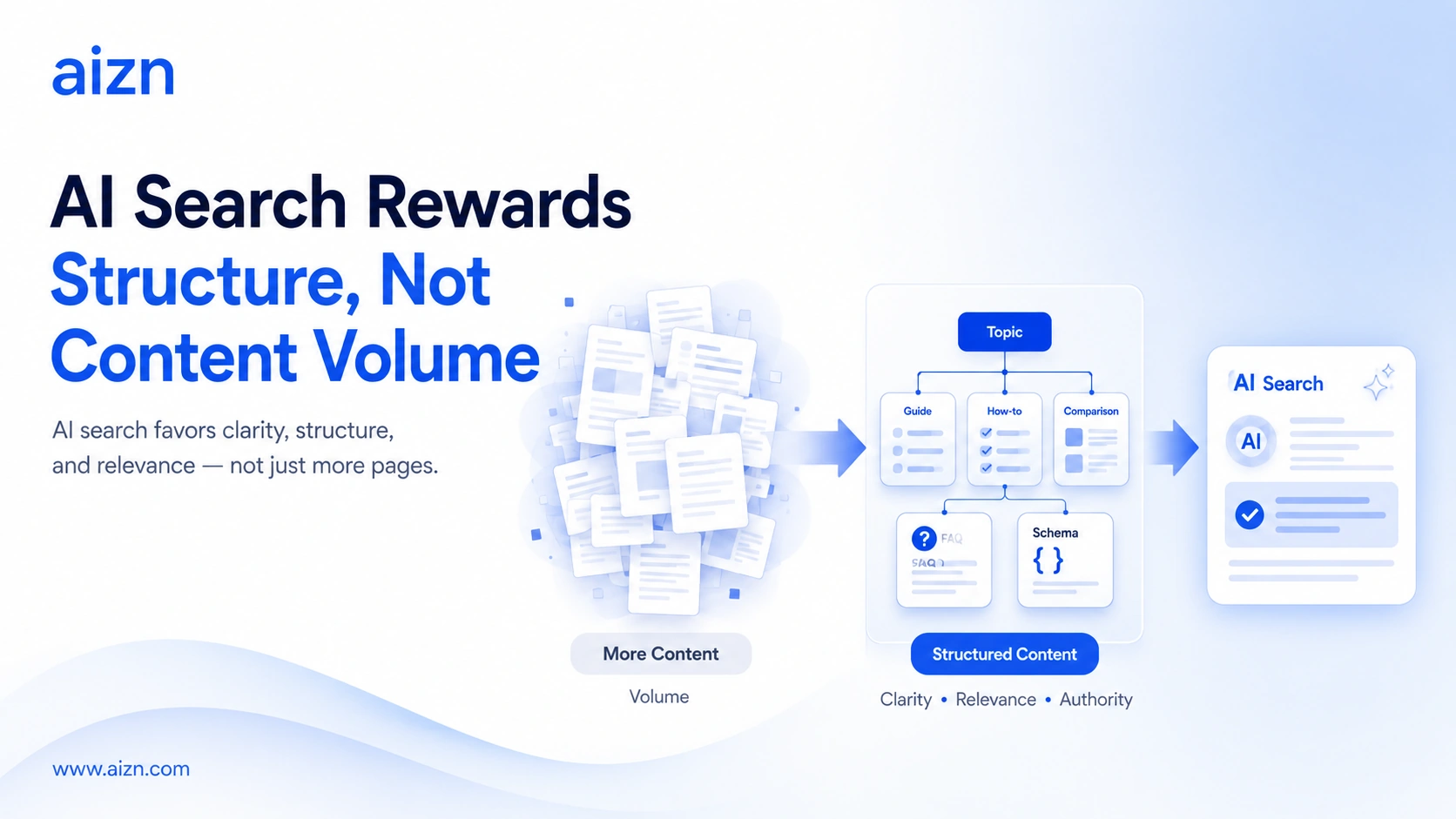
AI systems prefer content that is:
- structured
- factual
- concise
- logically organized
- easy to summarize
This is why AI-friendly formatting is becoming critical.
What Type of Content Performs Best in AI Search?
Some content formats perform especially well in AI-generated search systems.
High-performing AI Search content:
- Definitions
- FAQ pages
- Comparison articles
- Step-by-step guides
- Technical explanations
- Industry overviews
- Workflow tutorials
Examples of AI-Friendly Content
- What Is GEO?
- GEO vs SEO
- How ChatGPT Search Works
- Best AI Website Builder
- How to Optimize for AI Search
- AI SEO Strategies for Businesses
AI systems naturally prefer content with reusable informational structures.
Key Elements of AI Search Optimization
1. Structured Headings
Use:
- H1
- H2
- H3
- bullet lists
- comparison tables
- summaries
This improves AI readability.
2. Definition-Based Content
AI systems frequently extract concise definitions directly into generated answers.
Example:
“AI Search Optimization is the process of optimizing content for AI-generated search systems.”
This type of sentence performs extremely well.
3. FAQ Sections
FAQ sections are highly valuable because AI systems often reuse FAQ answers directly.
Examples:
- What is GEO?
- How does AI search work?
- Can ChatGPT recommend businesses?
- What is AI SEO?
4. Semantic Authority
AI systems evaluate topical depth rather than isolated keywords alone.
Businesses should build interconnected topic clusters instead of disconnected blog posts.
5. AI-Friendly Formatting
AI systems prefer:
- short paragraphs
- concise explanations
- tables
- comparison structures
- clear logic
Long unstructured content performs worse.
Why GEO Is Closely Related to AI Search Optimization
GEO (Generative Engine Optimization) is one of the most important parts of AI Search Optimization.
GEO focuses specifically on improving:
- AI recommendation probability
- AI citation frequency
- answer engine visibility
- AI-generated brand exposure
As AI search grows, GEO becomes increasingly important for future digital visibility.
How AIZN Helps Businesses Optimize for AI Search
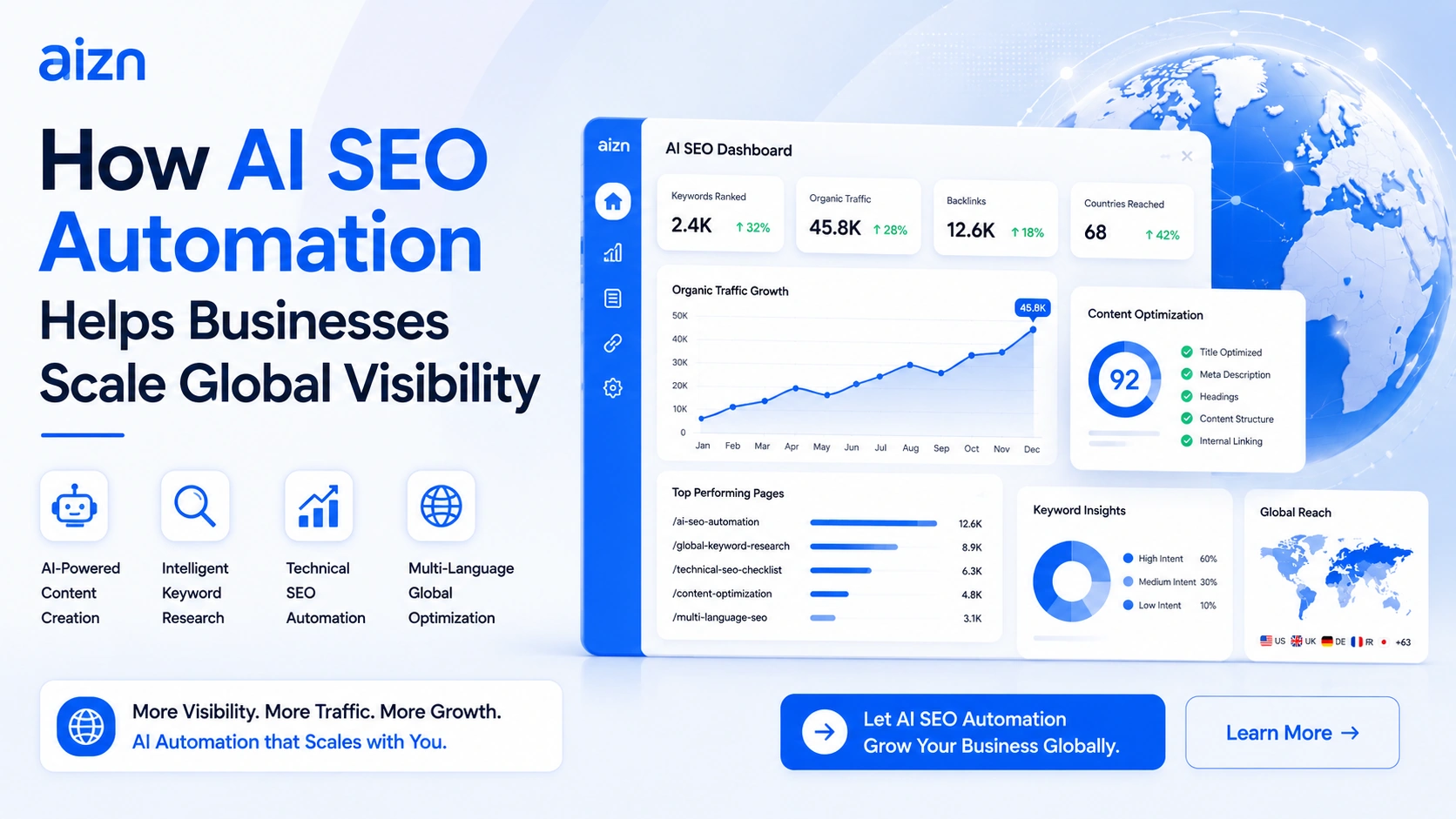
AIZN AI helps businesses build AI-search-ready websites and AI-friendly content systems optimized for platforms like ChatGPT, Gemini, and Perplexity.
AIZN combines:
GEO + SEO + Data + AI Agents
to help businesses improve:
- AI visibility
- semantic authority
- multilingual search presence
- AI recommendation probability
- AI-friendly website structures
AIZN AI Search Optimization Capabilities
✔ AI-generated GEO pages
✔ automated SEO content systems
✔ multilingual AI publishing
✔ AI-ready content structures
✔ automated FAQ generation
✔ AI citation optimization
This helps businesses prepare for the future of AI-driven search.
Why Early AI Search Optimization Matters
AI-generated search is still in its early growth stage.
This creates a major opportunity for early adopters.
Businesses that optimize for AI search now can:
- establish authority faster
- increase AI recommendation visibility
- improve citation frequency
- gain long-term competitive advantages
Over time, AI systems will increasingly favor trusted and authoritative sources.
FAQ
What is AI Search Optimization?
AI Search Optimization is the process of optimizing content for AI-generated search engines and answer systems.
Is AI Search Optimization different from SEO?
Yes. SEO focuses on search rankings, while AI Search Optimization focuses on AI understanding and recommendation visibility.
What platforms use AI-generated search?
Platforms include:
- ChatGPT
- Gemini
- Perplexity
- Claude
- DeepSeek
- Google AI Overview
Why is AI Search Optimization important?
Because AI systems increasingly influence how users discover brands and information online.
What is GEO?
GEO stands for Generative Engine Optimization, which focuses on optimizing content for AI-generated answers.
Conclusion
Search is evolving rapidly.
The internet is shifting from:
traditional search engines
to:
AI-generated answer systems.
This changes how businesses compete for visibility online.
Traditional SEO remains important.
But the future belongs to businesses that also optimize for AI search visibility, AI recommendations, and GEO.
The future of search is not just about rankings.
It is about becoming part of the AI-generated answer layer.