For more than two decades, SEO dominated digital marketing.
Businesses optimized websites for Google rankings, targeted keywords, built backlinks, and competed for clicks.
That system created the modern internet economy.
But search is changing again.
Today, users increasingly rely on AI systems like:
- ChatGPT
- Gemini
- Perplexity
- Claude
- DeepSeek
Instead of browsing multiple websites, users now ask AI directly and receive complete answers instantly.
This shift introduces a new optimization model:
GEO (Generative Engine Optimization)
And it may become the biggest transformation in search since Google itself.
What Is SEO?
SEO (Search Engine Optimization) is the process of optimizing websites to rank higher in traditional search engines like Google and Bing.
Traditional SEO focuses on:
- keywords
- backlinks
- page speed
- metadata
- technical optimization
- search rankings
The goal is simple:
Increase visibility in search results and drive clicks to websites.
For years, this model worked extremely well.
What Is GEO?
GEO (Generative Engine Optimization) is the process of optimizing content for AI-generated search systems.
Instead of optimizing for search rankings alone, GEO focuses on helping AI systems:
- understand content
- trust information
- cite sources
- recommend brands
- generate accurate answers
Platforms like ChatGPT and Gemini no longer behave like traditional search engines.
They behave like answer engines.
That changes how visibility works online.
GEO vs SEO: Core Differences
Although GEO and SEO are related, they optimize for different environments.
| SEO | GEO |
|---|---|
| Optimizes search engines | Optimizes AI systems |
| Focuses on rankings | Focuses on AI recommendations |
| Click-driven | Answer-driven |
| Keyword-focused | Context-focused |
| Website traffic | AI visibility |
| Google algorithms | AI understanding |
| SERP competition | AI citation probability |
The key difference is simple:
SEO helps users find websites.
GEO helps AI recommend brands.
Why AI Search Changes Everything
Traditional search followed this process:
Search → Click → Website
AI search changes it to:
Question → AI Answer → Recommended Brand
This dramatically reduces the importance of traditional click behavior.
Users increasingly receive answers without visiting websites.
As AI-generated answers become more common, businesses face a critical challenge:
If AI systems do not understand your content, your brand may disappear from future search visibility.
This is why GEO is becoming essential.
Why Traditional SEO Alone Is No Longer Enough
SEO still matters.
Google rankings still drive traffic.
But SEO alone is no longer sufficient because:
- AI systems summarize information directly
- AI answers reduce clicks
- users increasingly trust AI-generated recommendations
- AI chooses which brands to mention
This means businesses now need two layers of visibility:
1. Search Engine Visibility (SEO)
2. AI Recommendation Visibility (GEO)
Companies that ignore GEO may lose visibility over time, even if their SEO remains strong.
How GEO Works
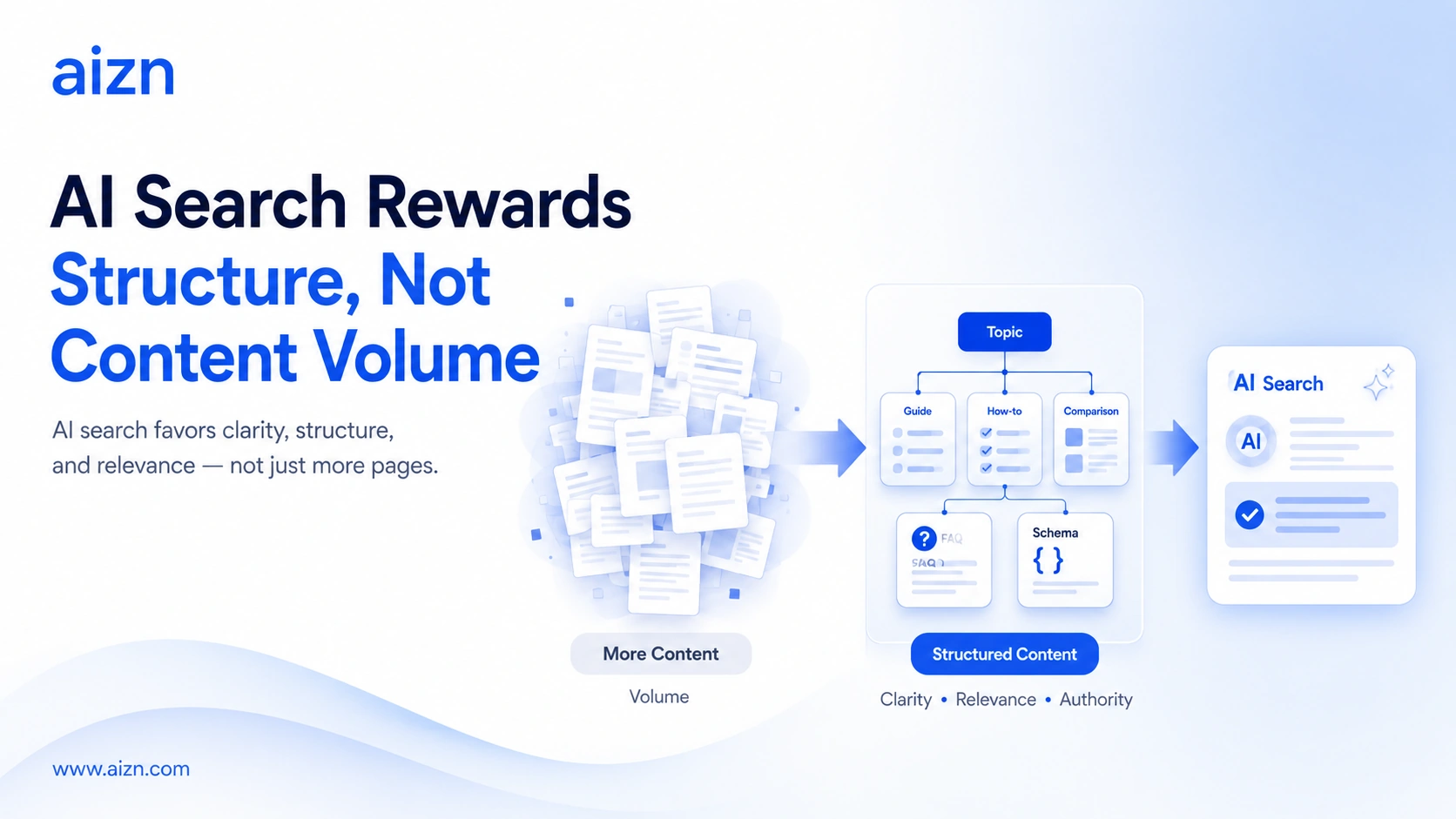
GEO focuses on creating content that AI systems can easily process, reuse, and reference.
This includes:
Structured formatting
AI prefers:
- H1/H2 structures
- definitions
- bullet points
- comparison tables
- FAQs
- summaries
Semantic relevance
GEO emphasizes:
- topical authority
- contextual meaning
- intent alignment
- entity relationships
Instead of only matching keywords.
AI-friendly explanations
AI systems prefer content that is:
- concise
- reusable
- factual
- logically structured
This increases citation probability.
What Content Performs Best for GEO?
High-performing GEO content typically includes:
- comparison articles
- definitions
- how-to guides
- FAQ pages
- technical explanations
- workflow tutorials
Examples include:
- GEO vs SEO
- What Is AI Search Optimization
- How ChatGPT Search Works
- AI Search vs Google Search
- Best AI Website Builder
These formats align naturally with AI-generated answers.
How AIZN Helps Businesses Optimize for GEO
AIZN AI helps businesses prepare for the AI search era through:
- AI website generation
- GEO content systems
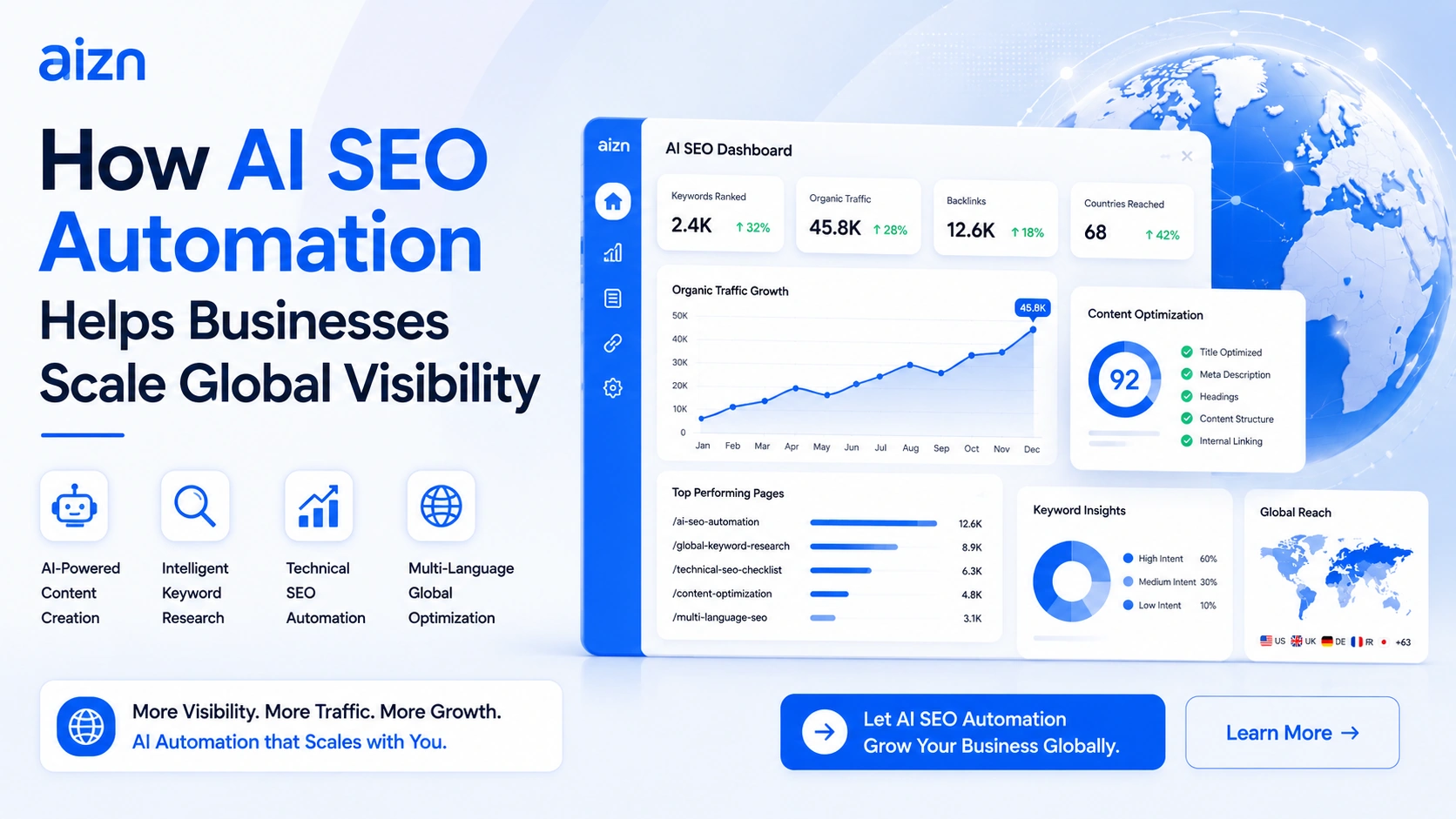
- AI SEO automation
- multilingual publishing
- AI Agent workflows
- AI-ready content structures
AIZN combines:
to help companies improve both:
- Google rankings
- AI recommendation visibility
Why Early GEO Adoption Matters
AI search is still in its early growth phase.
That creates a major opportunity.
Businesses that optimize for GEO early can:
- establish AI authority faster
- increase citation frequency
- improve AI recommendation visibility
- gain long-term competitive advantages
Over time, AI systems will increasingly favor trusted and established content sources.
The earlier companies build GEO foundations, the stronger their future visibility becomes.
GEO and SEO Will Work Together
GEO does not replace SEO.
The future is:
SEO + GEO
SEO remains important for:
- indexing
- website discovery
- traditional search traffic
GEO becomes critical for:
- AI-generated answers
- AI recommendations
- answer engine visibility
- AI citation optimization
Businesses need both.
FAQ
What does GEO stand for?
GEO stands for Generative Engine Optimization.
What is the difference between GEO and SEO?
SEO optimizes traditional search rankings, while GEO optimizes AI understanding, citation, and recommendation probability.
Is GEO replacing SEO?
No. GEO complements SEO rather than replacing it.
Why is GEO important?
Because AI search platforms increasingly control how users discover information online.
Which platforms does GEO target?
GEO targets AI systems like:
- ChatGPT
- Gemini
- Perplexity
- Claude
- DeepSeek
Can businesses optimize for both SEO and GEO?
Yes. The most effective strategy is combining traditional SEO with AI search optimization.
Conclusion
Search is entering a new era.
The internet is shifting from:
Search engines
to:
AI answer engines.
This changes how brands earn visibility online.
Traditional SEO helped businesses rank.
GEO helps businesses get recommended by AI.
The companies that adapt early will gain a major long-term advantage in the future of search.